
Root Canal Treatment in Tampa, FL
When the soft tissue inside a tooth becomes inflamed or infected, root canal treatment may relieve pain, remove the damaged tissue, and preserve the natural tooth instead of extracting it.
At Flex Dental, Dr. Benjamin J. Gubernick evaluates the tooth, surrounding bone, symptoms, restorability, and treatment options before determining whether root canal therapy, specialist care, or another procedure is appropriate.
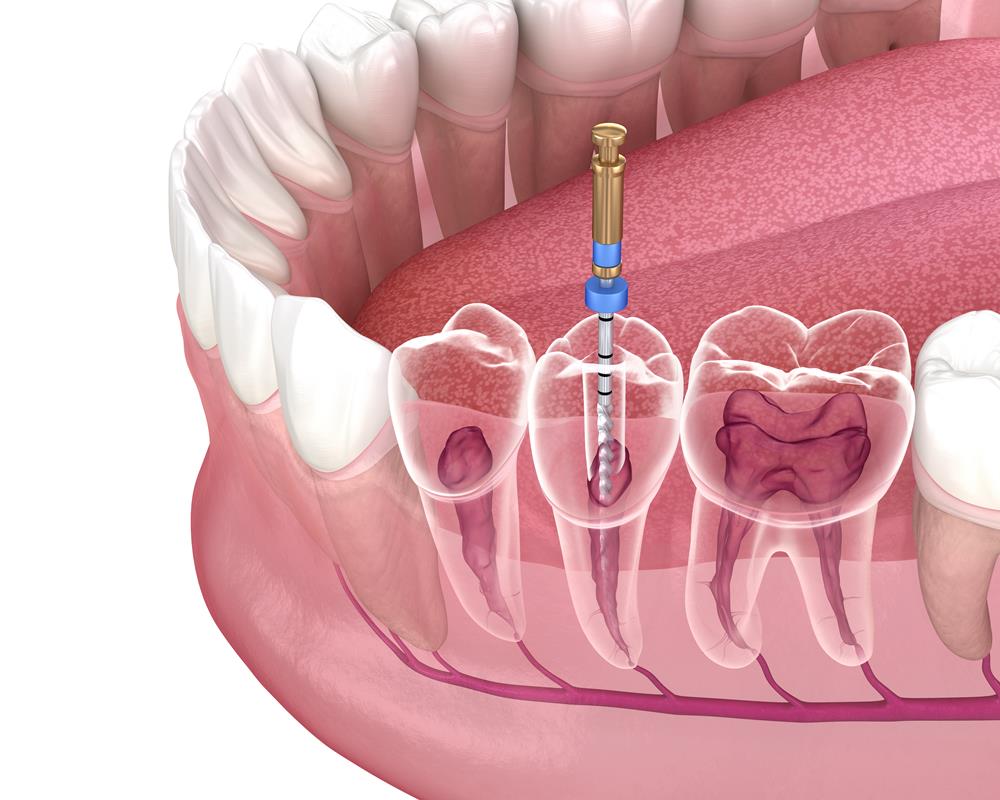
Root canal treatment addresses the pulp—not the root itself.
Beneath the tooth’s outer enamel and dentin is a central space containing soft tissue called the dental pulp. The pulp includes nerves, blood vessels, and connective tissue and extends from the crown of the tooth through narrow canals inside its roots.
Once a tooth is fully developed, it can continue functioning after the pulp is removed because the tissues surrounding the root continue to support and nourish the tooth.
Enamel
The hard outer layer protects the visible crown of the natural tooth.
Dentin
The layer beneath enamel forms most of the tooth’s structure and surrounds the pulp.
Dental pulp
Soft tissue containing nerves, blood vessels, and connective tissue inside the tooth.
Root canals
Narrow internal spaces extending through the roots toward the surrounding jawbone.
Bacteria or injury can damage the living tissue inside a tooth.
Deep tooth decay
An untreated cavity can progress through enamel and dentin until bacteria reach or irritate the dental pulp.
Cracks or fractures
A crack, broken cusp, or fracture may expose the inner tooth or create a pathway for bacteria.
Dental trauma
A blow to the tooth can damage the pulp even when no visible crack or chip is immediately apparent.
Repeated dental procedures
Multiple procedures or extensive restorations on the same tooth may contribute to irritation or inflammation of the pulp.
Leaking restoration
Decay or leakage around an old filling or crown may allow bacteria to reach deeper tooth structure.
Combined dental infection
In less common situations, disease around a tooth’s root and disease inside the tooth may interact and require coordinated diagnosis.
Tooth pain can change as inflammation or infection progresses.
Symptoms alone cannot confirm that a root canal is needed. Cracks, gum problems, bite trauma, sinus pressure, grinding, and other conditions can create similar discomfort.
Some infected teeth cause severe symptoms, while others become less painful after the pulp loses vitality. A decrease in pain does not always mean the condition has resolved.
Lingering temperature sensitivity
Hot or cold sensitivity may continue after the temperature stimulus has been removed.
Pain when biting
The tooth may feel painful, tender, elevated, or different when chewing or applying pressure.
Spontaneous toothache
Pain may begin without eating, drinking, or touching the tooth and may interfere with sleep.
Swollen or tender gums
Gum tissue near the affected tooth may become swollen, tender, irritated, or painful.
Gum pimple or drainage
A recurring bump on the gum may drain fluid and can indicate an infection associated with a tooth.
Tooth discoloration
A traumatized or nonvital tooth may become darker than the surrounding teeth.
Chipped or cracked tooth
A visible fracture or broken restoration may expose deeper tooth structure and require prompt assessment.
Facial or jaw swelling
Spreading swelling may indicate a progressing infection and should not be ignored.
Seek prompt help for spreading swelling or systemic symptoms.
Call Flex Dental promptly for facial swelling, pus, fever, rapidly increasing pain, or difficulty opening your mouth. Severe trouble breathing, swallowing, confusion, or rapidly expanding swelling may require emergency medical care.
The source of tooth pain must be identified before treatment.
A diagnosis may require several tests because pain can travel between teeth or originate from the gums, jaw muscles, bite, sinuses, or surrounding structures.
Review your symptoms and history
Dr. Gubernick reviews when the pain started, what triggers it, how long it lasts, previous dental work, trauma, medication, and relevant health conditions.
Examine the tooth and surrounding tissues
The tooth is evaluated for decay, cracks, fractures, swelling, drainage, mobility, damaged restorations, and gum-related concerns.
Perform sensitivity testing
Cold, heat, tapping, biting, palpation, or other clinical tests may help determine how the pulp and tissues around the root are responding.
Review dental X-rays
Dental images may reveal deep decay, prior treatment, changes around a root, bone loss, anatomy, or structural concerns that affect treatment.
Determine whether the tooth can be restored
The amount of remaining tooth, location of decay or fracture, periodontal support, and ability to place a lasting restoration are considered.
Review treatment and referral options
Options may include root canal treatment, monitoring, restorative care, extraction, or referral to an endodontist for specialized diagnosis or treatment.
Remove the damaged pulp, disinfect the canals, and seal the tooth.
Root canal treatment may be completed in one or more appointments depending on the tooth’s anatomy, infection, symptoms, previous treatment, and complexity.
The final protective restoration may be completed separately after the root canal procedure.
Local anesthesia
The tooth and surrounding area are numbed to improve comfort during treatment. Tell the team if you feel anxious or have had difficulty becoming numb in the past.
Dental dam isolation
A protective sheet is placed around the tooth to isolate it from saliva and help maintain a clean treatment field.
Access the pulp chamber
A controlled opening is created through the tooth so the pulp chamber and internal canals can be reached.
Remove inflamed or infected tissue
Small instruments are used to remove damaged pulp tissue and debris from the chamber and root canals.
Clean and shape the canals
The internal spaces are carefully enlarged, cleaned, and disinfected so they can be filled and sealed.
Fill and seal the root-canal system
The prepared canals are filled with a biocompatible material, commonly gutta-percha, and sealed to reduce bacterial re-entry.
Close the access opening
A temporary or permanent filling is placed according to the treatment plan. Follow all instructions about chewing on the tooth before final restoration.
Restore and protect the tooth
A permanent filling, buildup, or crown is placed based on the location of the tooth and the amount of remaining structure.
Root canal treatment is not complete until the tooth is properly restored.
Removing the pulp treats the inside of the tooth, but the remaining tooth structure still needs protection against leakage, decay, biting forces, and fracture.
Back teeth generally experience heavier chewing forces and often require a crown. Front teeth may sometimes be restored differently depending on remaining structure and the location of the access opening.
Mild tenderness may occur while the tissues around the tooth heal.
Post-treatment experiences vary. Follow the medication, hygiene, eating, and restoration instructions provided specifically for your procedure.
Wait for numbness to fade
Avoid chewing until normal sensation returns so you do not bite your cheek, lip, or tongue.
Expect temporary tenderness
The tooth or surrounding tissues may feel sore when biting for a few days, especially when infection was present beforehand.
Follow medication directions
Use over-the-counter or prescribed medication only as directed and disclose allergies, interactions, or health concerns.
Contact the office when needed
Call for severe pain, increasing swelling, fever, a lost temporary filling, or symptoms that worsen instead of improving.
The best option depends on whether the tooth can be predictably saved.
Preserving a restorable natural tooth is often desirable, but not every tooth is a candidate for root canal treatment. The amount of remaining structure, crack location, periodontal support, infection, anatomy, and long-term prognosis must be considered.
Root canal treatment
When the tooth can be restored, root canal therapy may remove internal infection while allowing the natural root and tooth to remain in place.
- Maintains the natural tooth in the dental arch
- Preserves natural chewing contact and sensation
- Avoids creating an immediate missing-tooth space
- Usually requires a permanent restoration afterward
- May require retreatment if healing is incomplete
- Requires sufficient remaining tooth and bone support
Tooth extraction
Extraction may be recommended when the tooth has a severe fracture, inadequate remaining structure, poor periodontal support, inaccessible canals, or another condition preventing a dependable restoration.
- Removes a tooth that cannot be predictably restored
- Creates a space that may affect chewing and alignment
- May require a dental implant, bridge, or removable option
- Replacement may involve additional procedures and healing
- Implant candidacy depends on bone, health, and anatomy
- Treatment should consider both immediate and long-term needs
Complex cases may benefit from a root canal specialist.
Endodontists are dentists with advanced specialty training focused on diagnosing tooth pain and treating the inside of teeth.
Dr. Gubernick may recommend specialist evaluation when anatomy, previous treatment, trauma, symptoms, or complexity require additional endodontic expertise.
Benjamin J. Gubernick, DDS
Personalized diagnosis and restorative planning focused on relieving discomfort, preserving natural teeth, and protecting long-term function.
Saving the tooth requires both endodontic and restorative planning.
Dr. Gubernick evaluates the cause of the problem, the condition of the pulp, surrounding bone, remaining tooth structure, bite, and ability to place a protective restoration.
When specialist treatment is appropriate, Flex Dental can coordinate referral and complete the final restorative phase after the endodontic procedure.
Tooth-pain and root canal evaluations in Tampa.
Contact Flex Dental for persistent tooth pain, lingering temperature sensitivity, biting discomfort, swelling, a cracked tooth, or concern about a dental infection.
310 South Dale Mabry Highway, Suite 120
Tampa, FL 33609
(813) 999-1092
Tell the team if you have swelling, severe pain, trauma, or difficulty eating or sleeping.
Questions about tooth pain and root canal therapy?
These answers provide general education. A dental examination and appropriate imaging are required to determine the cause of your symptoms.
What is root canal treatment?
Root canal treatment removes inflamed or infected pulp from inside a tooth. The internal canals are then cleaned, shaped, filled, and sealed before the tooth receives an appropriate permanent restoration.
Why might I need a root canal?
Root canal treatment may be needed when deep decay, a crack, trauma, repeated procedures, or a leaking restoration causes irreversible pulp inflammation or infection.
What are signs that I might need a root canal?
Possible signs include lingering hot or cold sensitivity, severe pain when chewing, spontaneous toothache, swelling, a gum pimple, tooth discoloration, or a chipped or cracked tooth.
Can I need a root canal without having pain?
Yes. Some teeth lose vitality with limited symptoms or become less painful after the pulp tissue dies. Dental images and clinical testing may still reveal infection or damage.
Is root canal treatment painful?
Local anesthesia is used to numb the treatment area. Many patients find the procedure comparable to other restorative dental treatment. The infection or inflammation present before treatment is often the source of significant pain.
How long does a root canal take?
Appointment length and number of visits depend on the tooth, number and shape of canals, infection, previous treatment, symptoms, and complexity. Some cases require more than one visit.
Will I need a crown after a root canal?
Many back teeth require crowns because they experience strong chewing forces and may have lost substantial structure. The correct restoration depends on the tooth’s location and remaining structure.
Can I chew on the tooth before the crown is placed?
Avoid heavy chewing, hard foods, and sticky foods on a tooth with a temporary or incomplete restoration. Follow the instructions provided for your specific tooth.
What should I expect after treatment?
Mild tenderness, biting sensitivity, or soreness may occur for several days. Symptoms should generally improve rather than become progressively worse.
When should I call after a root canal?
Call for severe or increasing pain, swelling, fever, an uneven bite, a loose or missing temporary filling, an allergic reaction, or symptoms that do not improve as expected.
Can I eat after root canal treatment?
Wait until numbness has worn off before chewing. Choose softer foods and avoid placing heavy pressure on the treated tooth until the final restoration is complete.
Can I brush and floss after a root canal?
Unless instructed otherwise, continue brushing and flossing carefully. Be gentle around a temporary restoration and follow the specific hygiene directions provided by the office.
Can a root canal-treated tooth become infected again?
Yes. Reinfection may occur because of new decay, a leaking or broken restoration, an untreated canal, a crack, trauma, or another pathway allowing bacteria to re-enter the tooth.
What happens if a root canal does not heal?
Additional evaluation may lead to endodontic retreatment, endodontic surgery, restorative treatment, or extraction, depending on the cause and whether the tooth remains restorable.
Is extraction better than a root canal?
Saving a restorable natural tooth is often preferred, but an extraction may be necessary when a fracture, decay, bone loss, or insufficient remaining structure prevents a predictable restoration.
Who performs root canal treatment?
General dentists receive training in root canal treatment. Endodontists are dental specialists with additional training focused on diagnosing tooth pain and treating the inside of teeth. Complex cases may be referred.
How long can a root canal-treated tooth last?
A properly treated, restored, and maintained tooth may remain functional for many years. Longevity depends on the original damage, restoration, bite forces, cracks, decay, gum support, hygiene, and continuing dental care.
Does dental insurance cover root canal treatment?
Many dental plans provide some endodontic coverage, but deductibles, percentages, waiting periods, annual maximums, exclusions, and crown coverage vary by plan.
How much does a root canal cost?
Cost depends on which tooth is involved, canal complexity, previous treatment, whether specialist care is needed, and the filling, buildup, or crown required afterward. Flex Dental can provide an estimate after evaluation.
How do I schedule a root canal evaluation?
Use the Flex Dental online appointment portal or call (813) 999-1092 . Tell the team if you have severe pain, swelling, trauma, or a broken tooth.
Find the source of your pain and learn whether the tooth can be saved.
Schedule an evaluation with Dr. Benjamin J. Gubernick to review your symptoms, dental images, treatment options, restorative needs, and whether root canal therapy or specialist care is appropriate.