
Porcelain Veneers in Tampa, FL
Porcelain veneers are thin, custom-designed ceramic restorations bonded to the front surfaces of selected teeth to refine their color, shape, size, proportion, and overall appearance.
At Flex Dental, Dr. Benjamin J. Gubernick begins with your oral health, bite, facial proportions, existing tooth structure, and personal goals before determining whether veneers are the right approach for your smile.
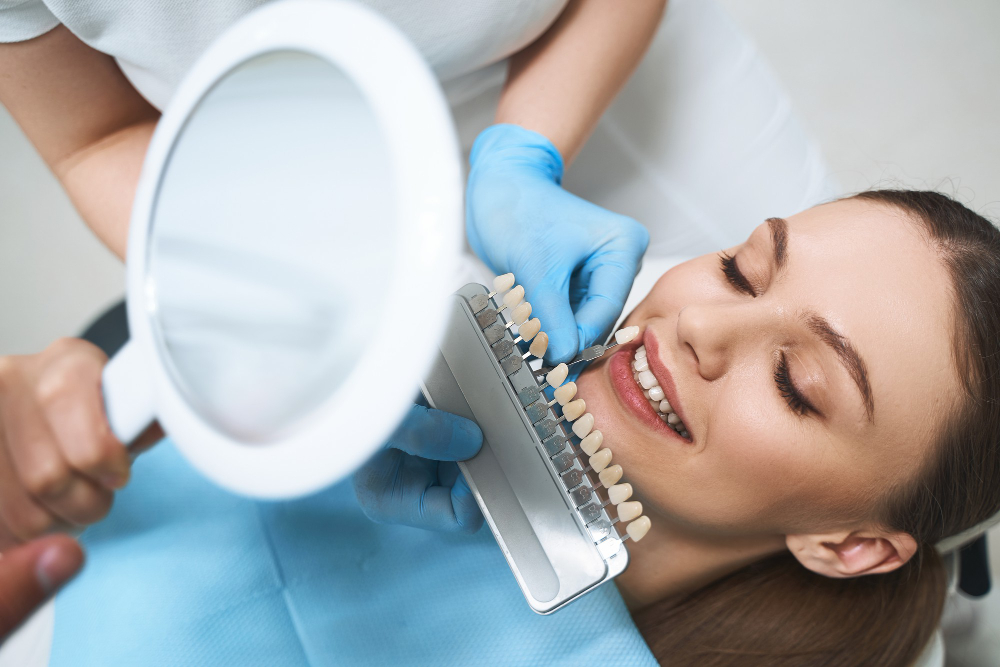
A thin ceramic surface designed to transform visible tooth structure.
A veneer covers the front and selected side surfaces of a tooth. Unlike a dental crown, it does not surround the entire tooth. Porcelain can be layered and finished to recreate natural-looking translucency, color variation, contours, and surface texture.
Veneers are primarily cosmetic restorations. They may improve selected imperfections, but they do not replace treatment for active cavities, gum disease, infection, severe structural damage, or significant bite problems.
Thin ceramic
Each veneer is fabricated as a slender restoration designed to cover the visible surface of a selected tooth.
Custom contours
Shape, width, length, edges, line angles, and surface details are planned for the individual smile.
Bonded restoration
The final ceramic veneer is bonded to prepared tooth structure with a dental adhesive system.
Cosmetic planning
Veneers may be used individually or as part of a broader smile plan involving multiple front teeth.
One treatment can address several visible smile concerns.
Deep discoloration
Veneers may mask stains or internal discoloration that does not respond predictably to professional teeth whitening.
Chipped edges
Selected chips, worn edges, and minor fractures may be incorporated into a more balanced ceramic contour.
Uneven tooth shapes
Narrow, short, irregular, or disproportionate front teeth may be visually reshaped with customized restorations.
Small spaces
Veneers may close selected spaces when doing so creates appropriate tooth proportions and does not compromise the bite.
Mild visual misalignment
Carefully planned veneers can sometimes improve the appearance of mildly rotated or uneven teeth without physically moving them.
Worn-looking smiles
Selected loss of visible length or worn contours may be restored after the cause of wear and the patient’s bite are evaluated.
Natural-looking veneers require more than choosing “white.”
A successful result should relate to your face, lips, gums, neighboring teeth, bite, age, personality, and personal preferences. The goal is not to make every tooth identical.
Tooth proportions
Width, length, symmetry, and the relationship between neighboring teeth influence the overall balance of the smile.
Shade and translucency
Brightness, undertone, opacity, translucency, and internal color effects are selected according to the desired result.
Edges and texture
Subtle surface texture, edge shape, line angles, and light reflection help prevent an overly flat or artificial appearance.
Gumline harmony
The position and health of the gums affect visible tooth length, symmetry, margins, and the final appearance.
The best candidates begin with healthy, stable teeth and gums.
Dr. Gubernick evaluates your enamel, existing restorations, cavities, gum health, bite, tooth position, grinding habits, and cosmetic goals before recommending veneers.
Existing dental disease should be treated first. In some cases, orthodontics, whitening, bonding, crowns, or no treatment may preserve more natural tooth structure or produce a more predictable result.
From consultation to final ceramic bonding.
The exact number of appointments depends on your oral health, number of veneers, preparation needs, laboratory process, and whether preliminary treatment is required.
Porcelain veneers commonly require multiple stages rather than a single immediate appointment.
Consultation and smile goals
Discuss what you like, what concerns you, how dramatic or subtle you want the change to be, and which features matter most.
Comprehensive dental evaluation
Dr. Gubernick examines the teeth, gums, bite, tooth structure, existing dentistry, and any disease that could affect the result.
Records and treatment planning
Photographs, digital scans, impressions, bite records, or dental X-rays may be taken according to the needs of the case.
Shade and design selection
The planned length, contours, proportions, shade, translucency, texture, and relationship between treated teeth are reviewed.
Tooth preparation
A controlled amount of enamel may be removed from the front and sides of selected teeth to create space and proper restorative contours.
Because enamel is commonly altered, porcelain veneer treatment should generally be considered irreversible.
Digital scan or impression
A detailed record of the prepared teeth and surrounding structures is created for fabrication of the final veneers.
Temporary veneers when indicated
Temporary restorations may protect prepared teeth and provide an opportunity to evaluate general shape, length, comfort, and appearance while the final ceramics are created.
Laboratory fabrication
A dental laboratory creates the porcelain restorations according to the treatment design and records supplied by the dentist.
Try-in and final approval
Each veneer is evaluated for fit, contacts, contours, shade, appearance, and relationship to neighboring teeth before final bonding.
Adhesive bonding and finishing
The teeth and ceramic surfaces are prepared according to the adhesive protocol. The veneers are bonded, cured, finished, and polished.
Bite and follow-up evaluation
Dr. Gubernick checks the bite and margins. Contact the office if your bite feels uneven, a veneer feels loose, or discomfort does not improve.
Understand both the advantages and the long-term commitment.
Porcelain veneers can provide a significant aesthetic change, but they are not maintenance-free or permanent for life. Your consultation should include benefits, limitations, alternatives, fees, and future replacement considerations.
Why patients consider porcelain
- Custom control over visible color and brightness
- Ability to refine tooth shape, length, and proportion
- Natural-looking translucency and surface characterization
- Resistance to many external stains compared with composite
- Ability to address several cosmetic concerns simultaneously
- Ceramic surface that can be finished to a smooth polish
- Customized treatment involving one or multiple teeth
What should be considered first
- Enamel preparation generally makes treatment irreversible
- Veneers may chip, crack, loosen, wear, or require replacement
- Temporary or ongoing tooth sensitivity may occur
- Cavities can still develop around or beneath veneer margins
- Gum recession may expose a margin over time
- Porcelain color does not change with future tooth whitening
- Grinding and damaging bite forces can increase failure risk
- Cosmetic treatment may not be covered by dental insurance
The most conservative effective option may be different for each tooth.
Dr. Gubernick may recommend one treatment or a combination of services depending on the underlying cause of the cosmetic concern.
Teeth whitening
Professional whitening may be appropriate when tooth shape and position are acceptable and discoloration is the main concern.
Explore teeth whitening →Dental bonding
Tooth-colored composite may repair selected chips, reshape small areas, or close minor spaces with less or no enamel preparation.
Explore cosmetic dentistry →Invisalign
Clear aligners physically move teeth and may be more appropriate for crowding, rotation, spacing, or bite-related concerns.
Explore Invisalign →Dental crowns
A crown may be more appropriate when a tooth is extensively damaged, heavily restored, structurally weakened, or needs greater coverage.
Explore dental crowns →Protect the veneers—and the natural teeth beneath them.
Veneers do not make teeth immune to cavities, gum disease, recession, grinding, or trauma. Daily hygiene and continuing dental care remain essential.
Contact Flex Dental if a veneer feels loose, develops a rough edge, chips, cracks, changes position, or if your bite no longer feels comfortable.
Benjamin J. Gubernick, DDS
Comprehensive restorative and cosmetic care planned around oral health, function, communication, and personalized smile goals.
Veneers should look beautiful and function within a healthy mouth.
Dr. Gubernick evaluates more than the visible front surface of each tooth. Gum health, enamel, existing restorations, tooth position, bite forces, neighboring teeth, and long-term maintenance all influence the treatment plan.
During your consultation, you can discuss the look you prefer, alternatives that may preserve more enamel, and the benefits, limitations, fees, and future responsibilities associated with porcelain veneers.
Porcelain veneer consultations in Tampa.
Visit Flex Dental to discuss chipped, stained, uneven, worn, or spaced teeth and learn whether porcelain veneers or another cosmetic option may fit your smile.
310 South Dale Mabry Highway, Suite 120
Tampa, FL 33609
(813) 999-1092
English, Spanish, and Portuguese
Questions before beginning a smile transformation?
These answers provide general education. A consultation and dental examination are required to determine whether veneers are suitable for your teeth.
What are porcelain veneers?
Porcelain veneers are thin, custom-made ceramic restorations bonded to the front and selected side surfaces of teeth to improve visible color, shape, size, proportion, or alignment.
What cosmetic concerns can veneers address?
Veneers may improve selected chips, worn edges, discoloration, uneven shapes, small spaces, short teeth, and mild visual misalignment. Their suitability depends on tooth health, position, enamel, gums, and bite.
Are porcelain veneers permanent?
Veneers are not guaranteed to last for life. They may eventually chip, crack, loosen, wear, develop margin concerns, or require replacement. Because enamel is commonly removed, treatment is generally irreversible.
Do veneers require removing tooth enamel?
Porcelain veneer treatment commonly requires removal of a controlled amount of enamel to create room for the restoration and appropriate contours. The amount varies by tooth and case.
Is getting porcelain veneers painful?
Local anesthesia may be used during preparation. Some patients experience temporary sensitivity or gum tenderness. Comfort and recovery vary according to the teeth treated and the preparation required.
How many appointments do porcelain veneers require?
Porcelain veneers commonly require several stages, including a consultation, records and design, tooth preparation, laboratory fabrication, final try-in, and bonding. Preliminary dental care may add appointments.
Will I receive temporary veneers?
Temporary veneers may be used when teeth have been prepared and the final porcelain restorations are being fabricated. Their use depends on the specific treatment plan.
How long do porcelain veneers last?
Longevity varies according to material, bonding, tooth structure, bite forces, grinding, trauma, oral hygiene, gum stability, decay, and continuing dental care. No exact lifespan can be guaranteed.
Can porcelain veneers stain?
Porcelain is generally more resistant to external staining than natural enamel or composite resin. However, surrounding teeth, bonding material, and margins may change over time.
Can veneers get cavities?
Porcelain itself does not decay, but the natural tooth beneath and around a veneer can still develop cavities. Brushing, interdental cleaning, fluoride, and dental visits remain necessary.
Can I whiten porcelain veneers?
Whitening products do not predictably change the color of porcelain. When whitening natural teeth is planned, it may be completed before selecting the final veneer shade.
Can veneers fix crooked teeth?
Veneers may improve the appearance of mild visual irregularities, but they do not move teeth. Invisalign or orthodontic treatment may be more appropriate for significant rotation, crowding, spacing, or bite concerns.
Are veneers appropriate if I grind my teeth?
Grinding and clenching can place damaging force on veneers. The severity of the habit, bite, tooth wear, and ability to use a protective appliance must be evaluated before treatment.
What is the difference between veneers and crowns?
A veneer primarily covers the visible front surface of a tooth. A crown surrounds more of the tooth and may be recommended when greater structural coverage is necessary.
What is the difference between porcelain veneers and bonding?
Porcelain veneers are custom ceramic restorations typically created by a dental laboratory. Bonding uses tooth-colored composite resin shaped directly on the tooth and may require less enamel removal, but it can stain or wear differently.
How many veneers will I need?
The number depends on which teeth show when you smile, the location of the concern, tooth proportions, neighboring teeth, shade goals, symmetry, and budget. Treatment may involve one tooth or several teeth.
Can a veneer be repaired if it chips?
Some small defects may be managed conservatively, while other chips, cracks, debonding, or fractures require replacement. Do not continue biting with a damaged or loose veneer.
Does dental insurance cover porcelain veneers?
Veneers are commonly considered cosmetic and may not be covered. Coverage depends on the dental plan, diagnosis, exclusions, medical necessity rules, and benefit limitations.
How much do porcelain veneers cost?
Cost depends on the number of teeth, preliminary treatment, preparation, laboratory design, materials, temporary restorations, and complexity. Flex Dental can provide an individualized estimate after your examination and plan.
How do I schedule a veneers consultation?
Use the Flex Dental online appointment portal or call (813) 999-1092 and tell the team you would like to discuss porcelain veneers.
Create a smile that looks refined, balanced, and unmistakably yours.
Meet with Dr. Benjamin J. Gubernick to discuss porcelain veneers, evaluate your oral health, compare alternatives, and develop a cosmetic plan based on your teeth, face, bite, and personal goals.