
Invisalign in Tampa, FL
Invisalign treatment uses a personalized series of clear, removable aligners to gradually reposition selected teeth and improve the alignment of your smile and bite.
At Flex Dental, Dr. Benjamin J. Gubernick evaluates your teeth, gums, bite, jaw relationships, existing dental work, health history, and treatment goals before determining whether Invisalign clear aligners are an appropriate option.
A sequence of customized aligners designed to move teeth gradually.
Invisalign is a brand of clear aligner therapy. Each aligner is made to fit a planned stage of treatment and applies controlled pressure to selected teeth. As treatment progresses, you change to the next aligner according to Dr. Gubernick’s instructions.
The aligners are removable, but they work only while they are being worn. Most patients are instructed to wear them for approximately 20–22 hours per day, removing them mainly for meals, non-water beverages, brushing, and flossing.
Clear appearance
The aligners are made from transparent material and fit closely over the teeth, making them less noticeable than conventional metal braces.
Removable design
Aligners can be removed for eating and for normal brushing and flossing, but consistent daily wear is essential.
Digital planning
A digital model and treatment-planning system help map the intended movement and sequence for each stage.
Professional oversight
Progress visits are used to monitor fit, tooth movement, oral health, compliance, and the need for adjustments.
Clear aligners can address many alignment and bite concerns.
Crowded Teeth
Crowding occurs when there is insufficient space for teeth to align normally, causing overlapping, rotation, or displacement.
Gaps and Spacing
Selected spaces between teeth may be closed or redistributed as part of a comprehensive alignment and bite plan.
Overbite or Deep Bite
Invisalign may be used in selected cases where the upper front teeth overlap the lower front teeth more than desired.
Underbite
Some tooth-related underbites can be improved with aligners. More significant jaw discrepancies may require other treatment.
Crossbite
Selected crossbites may respond to controlled tooth movement, depending on whether the cause is dental, skeletal, or combined.
Open Bite
Invisalign may improve selected cases where upper and lower teeth do not overlap or contact appropriately when biting.
Orthodontic treatment designed to fit more naturally into daily life.
Clear aligners provide different lifestyle features than fixed braces. Their suitability still depends on the type of movement required, treatment compliance, oral health, and the clinical judgment of the treating dentist.
The most important goal is not simply straighter front teeth. A responsible treatment plan also considers how the upper and lower teeth fit together and how the result can be maintained.
Less visible treatment
Clear aligners fit closely over the teeth and are generally less noticeable than metal brackets and wires.
Removable for meals
You remove the aligners before eating, so there are no bracket-related food restrictions while the aligners are out.
Familiar oral hygiene
The aligners can be removed so you can brush and floss without navigating around fixed orthodontic brackets and wires.
Smooth aligner surfaces
The aligners do not use traditional metal brackets, although pressure or tenderness may occur as teeth begin moving.
Digitally planned stages
Tooth movement is organized into a planned sequence that can be reviewed and monitored throughout treatment.
Personalized treatment
The aligner sequence, wear schedule, additional features, and progress visits are based on your individual case.
Healthy supporting tissues and consistent wear are essential.
Invisalign may be considered for teens and adults—and selected younger patients—but age alone does not determine candidacy. The condition of the teeth and gums, jaw relationships, type of movement required, growth, existing restorations, and ability to follow instructions all matter.
Before aligner treatment begins, active cavities, gum disease, failing restorations, impacted teeth, significant bone concerns, or other oral-health problems may need to be addressed.
From digital records to retainers.
Every Invisalign plan is different. Treatment sequence, aligner changes, attachments, monitoring intervals, and total time depend on the diagnosis and how the teeth respond.
Consultation and orthodontic evaluation
Dr. Gubernick evaluates your teeth, gums, bite, jaw relationships, dental history, symptoms, existing restorations, and treatment goals.
Collect digital records
Digital scans, photographs, and necessary dental imaging are used to document your current alignment, bite, and supporting structures.
Design the treatment plan
A digital treatment plan maps the proposed sequence of tooth movement and helps Dr. Gubernick evaluate the intended result.
Receive your first aligners
The first sets are checked for fit. The team reviews insertion, removal, cleaning, wear time, storage, and what to do if an aligner is lost or damaged.
Add prescribed treatment features
Selected cases may use tooth-colored attachments, elastics, or other planned features to help direct specific movements.
Progress through the aligner series
Wear each set for the prescribed time and move to the next set only according to the schedule provided by Flex Dental.
Attend monitoring visits
Progress appointments evaluate aligner fit, tracking, gum health, tooth movement, bite changes, and the need for an updated scan or additional aligners.
Complete treatment and begin retention
After the active tooth movement is complete, retainers are prescribed to help hold the teeth in their new positions.
The clear trays may be only one part of the complete plan.
Some Invisalign cases require additional features to improve aligner grip, create space, coordinate the bite, or refine the result. Not every patient needs every feature.
Dr. Gubernick will explain any recommended additions before they are used and review their purpose within your treatment.
Tooth-Colored Attachments
Small areas of tooth-colored composite may be bonded to selected teeth to give the aligner additional grip and help direct particular tooth movements.
Orthodontic Elastics
Selected bite corrections may use small elastics attached to prescribed points. They must be worn exactly as directed to provide the intended force.
Space Management
Crowded teeth may require planned space creation or redistribution. The method depends on tooth size, arch space, bite, periodontal health, and the overall treatment goal.
Additional or Refinement Aligners
An updated scan and additional aligners may be recommended when further movement is needed to improve tracking, alignment, contacts, or the final bite.
Daily habits have a direct effect on treatment progress.
Removability is one of the main benefits of clear aligners, but it also places more responsibility on the patient. Aligners cannot move teeth predictably when they are left out for long periods.
Follow the specific instructions provided for your aligners rather than changing wear time, switching sets early, or trying to alter a tray yourself.
Wear them approximately 20–22 hours
Keep the aligners in for the prescribed daily time, including while sleeping, unless Dr. Gubernick instructs you otherwise.
Remove them for meals
Take aligners out before eating. Drinking plain water while wearing them is generally acceptable unless instructed differently.
Avoid non-water drinks while wearing them
Sugary, acidic, hot, or pigmented beverages can become trapped beneath aligners, stain them, or increase oral-health risks.
Brush before reinserting
Clean the teeth after eating whenever possible so food and sugar are not held against the enamel beneath the aligners.
Clean aligners gently
Rinse and clean them with the method recommended by the dental team. Avoid hot water, which can distort plastic.
Store them in their case
Do not wrap aligners in napkins or leave them exposed. A case helps reduce loss, damage, contamination, and accidental disposal.
Do not chew on the aligners
Biting or chewing food with aligners in place can damage or distort them and interfere with treatment.
Call when an aligner is lost or damaged
Do not automatically skip forward or return to another tray without instructions from Flex Dental.
Your timeline depends on the movement required—not a standard promise.
Some limited alignment cases may be completed in several months, while comprehensive bite correction can take considerably longer. A universal six-, twelve-, or twenty-four-month promise is not appropriate without diagnostic planning.
Estimated treatment time may change if aligners are not worn as directed, teeth do not track as planned, appointments are missed, aligners are lost, oral-health problems develop, or additional treatment stages are needed.
Retainers are an essential part of the result.
Teeth can shift after active orthodontic treatment because the surrounding bone and soft tissues need time to adapt, and natural tooth movement can continue throughout life.
Dr. Gubernick will prescribe the type of retainer, initial wear schedule, long-term use, cleaning method, and follow-up needed for your smile.
Active treatment ends. Retention begins.
Retainers help hold teeth in the positions achieved during Invisalign treatment. They work only when worn according to the prescribed schedule.
- Wear the retainer for the instructed number of hours.
- Keep it clean using the recommended method.
- Store it in a protective case when it is not being worn.
- Do not expose it to hot water or excessive heat.
- Contact the office when it feels unusually tight or stops fitting.
- Replace damaged or worn retainers before tooth movement occurs.
Clear aligner treatment planned within your complete oral health.
Orthodontic movement affects more than the visible front teeth. Dr. Gubernick evaluates gum health, bone support, cavities, restorations, tooth shape, bite relationships, jaw function, and future cosmetic or restorative needs when developing your plan.
This comprehensive approach is especially valuable when Invisalign treatment is being coordinated with whitening, bonding, veneers, crowns, implants, or replacement of existing dental work.
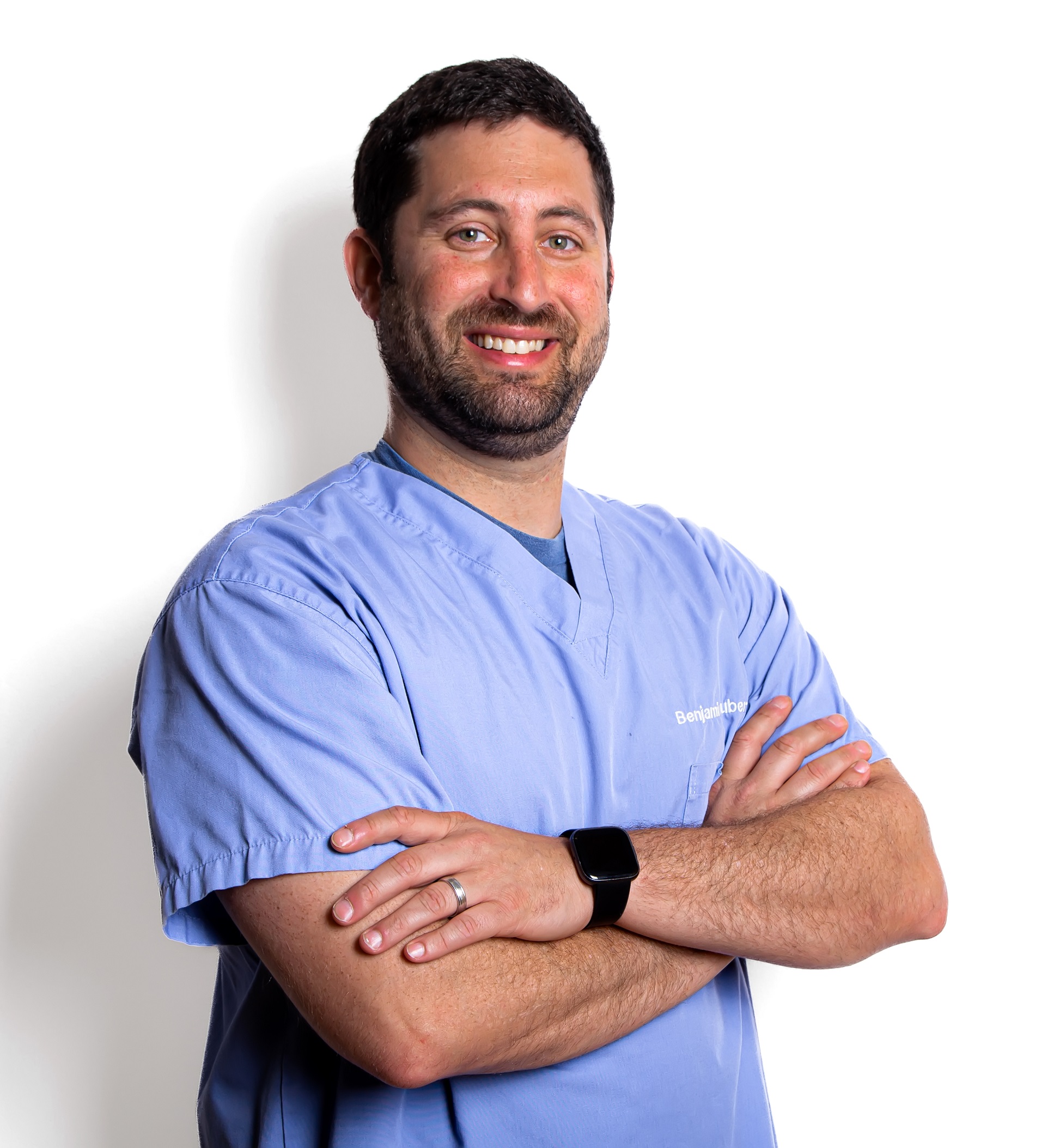
Benjamin J. Gubernick, DDS
Dr. Gubernick provides comprehensive restorative, cosmetic, and Invisalign care with recommendations based on each patient’s oral health, bite, comfort, and long-term goals.
Invisalign consultations in Tampa.
Visit Flex Dental to find out whether Invisalign clear aligners can address your crowding, spacing, crooked teeth, or bite concerns and to receive an individualized treatment estimate.
310 South Dale Mabry Highway, Suite 120
Tampa, FL 33609
(813) 999-1092
English, Spanish, and Portuguese
Questions about clear aligner treatment?
These answers provide general education. An examination and diagnostic records are needed to determine whether Invisalign is appropriate and what your treatment will require.
What is Invisalign?
Invisalign is a professionally prescribed clear aligner system that uses a sequence of customized removable aligners to gradually move selected teeth according to a digital treatment plan.
How does Invisalign move teeth?
Each aligner corresponds to a planned stage of treatment and applies controlled pressure to selected teeth. As you move through the prescribed sequence, the teeth are gradually guided toward their planned positions.
What problems can Invisalign treat?
Invisalign may treat selected cases involving crowded teeth, spacing, crooked teeth, overbite, deep bite, underbite, crossbite, open bite, or midline concerns. Suitability depends on the cause, severity, supporting tissues, and movements needed.
Can Invisalign treat every orthodontic problem?
No. Some cases are treated more predictably with braces, additional appliances, specialist care, extraction, or corrective jaw treatment. An examination is required to compare appropriate options.
How many hours per day should Invisalign aligners be worn?
Many patients are instructed to wear their aligners for approximately 20–22 hours per day. Follow the specific daily wear instructions provided by Dr. Gubernick.
Can I eat while wearing Invisalign aligners?
No. Remove the aligners before eating. Chewing food while wearing them can damage, distort, or stain the material and trap food against the teeth.
Can I drink coffee with Invisalign aligners in?
Aligners should generally be removed for beverages other than plain water. Coffee can stain the aligners, and hot beverages may distort plastic. Brush or rinse before reinserting them.
Are there food restrictions with Invisalign?
Because aligners are removed for meals, there are no bracket-related food restrictions while they are out. Patients should still follow appropriate dietary guidance, protect their teeth, and clean before reinserting the aligners.
How often will I change Invisalign aligners?
Aligner-change schedules vary. Some plans use approximately weekly changes, while others use a longer interval. Change to the next set only on the schedule provided by Flex Dental.
How long does Invisalign treatment take?
Treatment time depends on case complexity, the number and type of movements, daily wear, biological response, appointment attendance, and whether additional aligners are needed. An estimate can be provided after digital planning.
Does Invisalign hurt?
Pressure or mild tenderness may occur when treatment begins or when a new aligner is introduced. Severe, persistent, or unusual pain should be reported to Flex Dental.
What are Invisalign attachments?
Attachments are small tooth-colored composite shapes bonded to selected teeth. They may give the aligners additional grip and help direct specific movements. Not every patient needs them.
Will attachments make Invisalign visible?
Attachments are tooth-colored, but some may be noticeable depending on their number, shape, and location. Dr. Gubernick will explain which attachments are needed for your plan.
What happens if an aligner is lost or cracked?
Contact Flex Dental promptly. Do not automatically skip to the next aligner or return to an older set unless the office instructs you to do so.
Can teenagers use Invisalign?
Many teenagers may be candidates, but suitability depends on tooth development, bite, treatment complexity, oral hygiene, maturity, and the ability to wear and manage the aligners consistently.
Can adults receive Invisalign treatment?
Yes. Many adults receive clear aligner treatment. Gum health, bone support, existing restorations, missing teeth, previous dental work, and the required tooth movements must first be evaluated.
Do I need healthy gums before starting Invisalign?
Yes. Active periodontal disease and inadequate bone support can increase the risks associated with orthodontic movement. Gum disease should be evaluated and stabilized before treatment.
Will I need a retainer after Invisalign?
Yes. Retainers are generally prescribed after active orthodontic treatment to help maintain the new tooth positions. Follow the recommended wear and replacement schedule.
How much does Invisalign cost in Tampa?
Cost varies based on case complexity, treatment length, records, number of aligners, additional features, refinements, retainers, insurance benefits, and financing arrangements. Flex Dental can provide a personalized estimate after evaluation.
Does dental insurance cover Invisalign?
Some dental plans include orthodontic benefits that may apply to clear aligner treatment. Coverage, age limits, lifetime maximums, waiting periods, and eligibility vary by policy. Contact Flex Dental to review your plan information.
Patient education references
These independent resources provide general educational information and do not replace an examination, diagnosis, dental imaging, or personalized treatment recommendation.

Find out whether Invisalign fits your smile, bite, and lifestyle.
Meet with Dr. Benjamin J. Gubernick for an individualized evaluation, digital treatment planning, and a clear explanation of your Invisalign options, timeline, costs, and alternatives.